
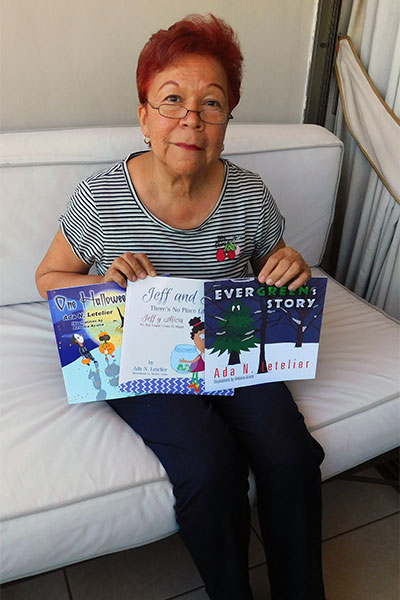
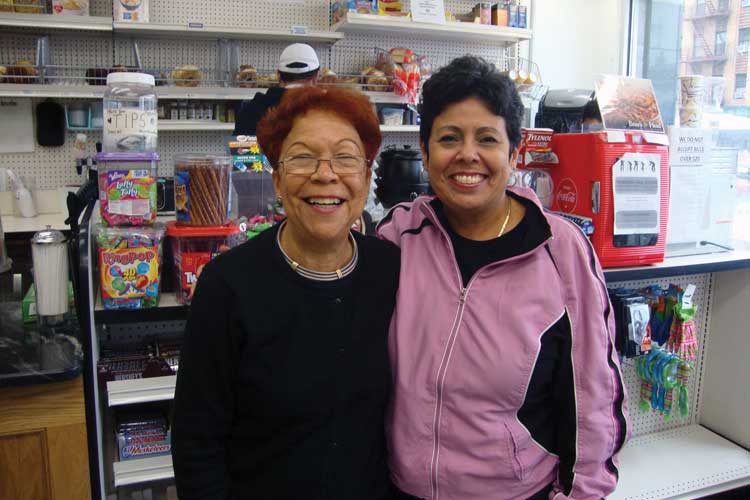
 Ada was born in the United States Virgin Islands to Puerto Rican parents. She and her family moved to the United States mainland when she was three years old. Ada grew up in and attended the public schools of Brooklyn, New York. As a young adult she moved to Manhattan, met her husband and had an only child. Upon graduating from college Ada became an early childhood teacher. This meant that she could teach grades pre-K to first. She worked at the Goddard-Riverside Head Start Center on the upper west side of Manhattan for five years before transferring to the New York City Public Schools.
Her career at the Board of Education – now the Department of Education – spanned 30+ years during which she taught for 12 years at P.S. 98M in the Inwood section of Manhattan before becoming an Assistant Principal at P.S. 115M in Washington Heights and later a principal, first in District One, on the lower east side of Manhattan at P.S. 142M and then in District Six, at P.S. 132M also in Washington Heights. Although a licensed early childhood teacher with many years experience behind her, Ada was asked to serve as an Assistant Principal at the W. Haywood-Burns Intermediate School (I.S. 176M) in Inwood even though she had never worked with this age group before (11-13 years old). She found this age group to be quite challenging although she loved the experience as she was able to understand this angst driven group of students a little bit more.
Ada is now retired and spends her time between her home in Chile, South America and her home in Inwood. Her personal hobbies are traveling and writing.
Ada was born in the United States Virgin Islands to Puerto Rican parents. She and her family moved to the United States mainland when she was three years old. Ada grew up in and attended the public schools of Brooklyn, New York. As a young adult she moved to Manhattan, met her husband and had an only child. Upon graduating from college Ada became an early childhood teacher. This meant that she could teach grades pre-K to first. She worked at the Goddard-Riverside Head Start Center on the upper west side of Manhattan for five years before transferring to the New York City Public Schools.
Her career at the Board of Education – now the Department of Education – spanned 30+ years during which she taught for 12 years at P.S. 98M in the Inwood section of Manhattan before becoming an Assistant Principal at P.S. 115M in Washington Heights and later a principal, first in District One, on the lower east side of Manhattan at P.S. 142M and then in District Six, at P.S. 132M also in Washington Heights. Although a licensed early childhood teacher with many years experience behind her, Ada was asked to serve as an Assistant Principal at the W. Haywood-Burns Intermediate School (I.S. 176M) in Inwood even though she had never worked with this age group before (11-13 years old). She found this age group to be quite challenging although she loved the experience as she was able to understand this angst driven group of students a little bit more.
Ada is now retired and spends her time between her home in Chile, South America and her home in Inwood. Her personal hobbies are traveling and writing.
Upon moving to Santiago, Chile with her husband, Ada has spent time traveling and discovering this thin and long country from the Atacama desert in the north (long recognized as the driest desert in the world) to Punta Arenas, the most southern city of any appreciable size in the world. Chile also claims about 480,000 square miles of Antartica. After settling into her new home in Santiago, Ada volunteered her time at the Santiago Times (Chile´s only English language newspaper for the past two decades). After a while she started writing for the paper, not as a reporter, but as a special features writer. Ada wrote stories that caught her and the publisher´s interest. Here are some of the articles she wrote for the Santiago Times:
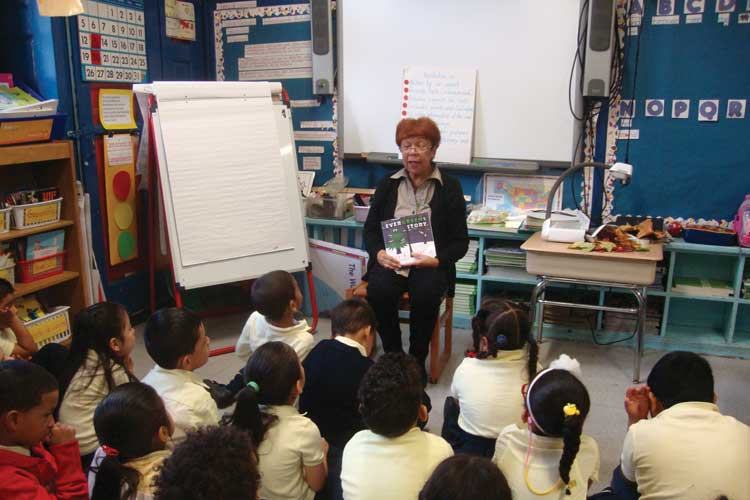
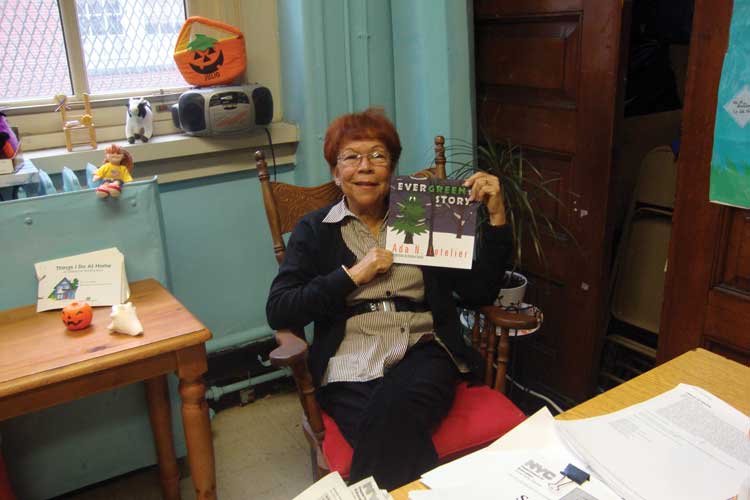
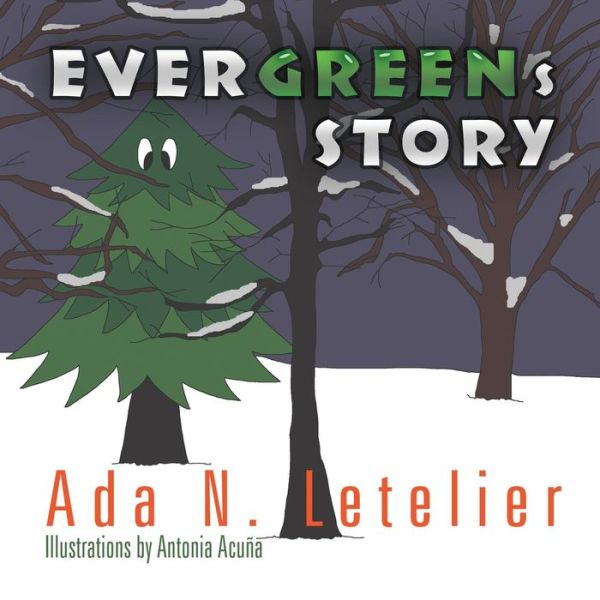 Evergreen is a sad little tree that doesn't understand her purpose in life. While the different seasons bring many changes to the forest, Evergreen remains the same, year in and year out. This all changes when a family comes into the forest and takes Evergreen home with them. It is then that Evergreen undergoes a transformation that leaves her reveling in the joy and knowledge that she too is very special and beautiful, just like her friends left behind in the forest. This heartwarming children's book is fun to read all year, but is especially meaningful during the winter season.
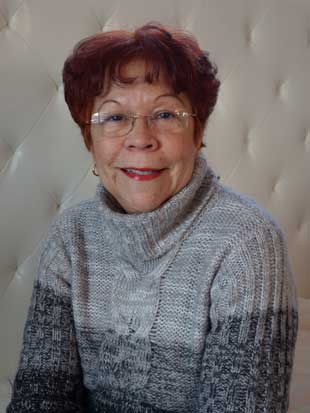
 EVERGREENs STORY is Ada N. Letelier’s first children’s book. Her love of books, especially children’s books, began and grew during her thirty-plus years as an early childhood educator in the public schools of New York City. The inspiration for her book came from reading uplifting stories to her students by authors such as Maurice Sendak, Leo Lionni, and Ezra Jack Keats. All had a lesson to teach, but in very unique ways that very young children could relate to. She hopes her story of the Evergreen will teach children the value of purposefulness. She believes we are all here for a purpose and one must not lose sight of this, no matter what.
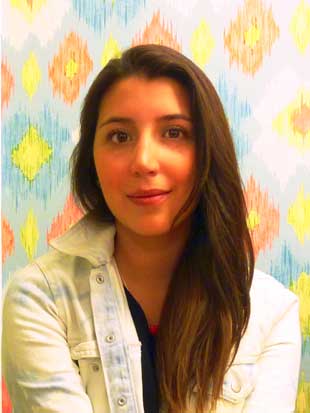 Antonia was born in Santiago, Chile where she currently resides. After graduating from Finis Terrae University with a degree in Fine Arts, Antonia went on to expand her interests in the arts to include Book Illustrating. Evergreen's Story is Antonia's first foray into the world of children's book illustration.
Recommendation from Barnes and Noble reader (& grandparent):
"The wisdom and grace of Aesop and Uncle Remus are recreated in this multi-layered story. Grandparents and parents alike will find many lessons to reap from this creative moral tale. Patience and humility, even salvation and glorification can be found in Evergreen's Story."
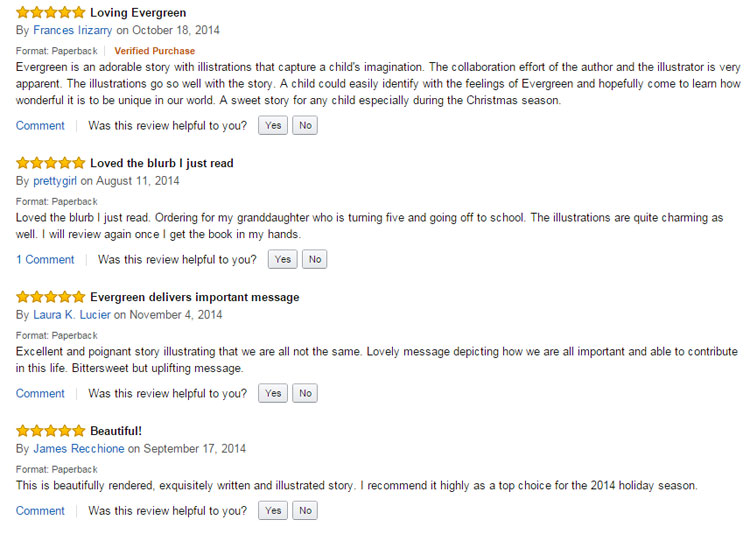
Here are some 5 star reviews from Amazon.com:

1. Trees are an important part of our world. 2. Tree-dwelling animals, insects and birds eat, sleep and play in tree canopies. 3. If we were to take away trees we would leave many animals without homes. 4. Many of the fruits and nuts we eat grow on trees. Walnuts grow on trees, peanuts do not! 5. Tree sap from the Maple tree is used for making maple syrup (yummy!) 6. We eat some form of leaf almost every day. Lettuce and spinach are two examples. 7. There are two main types of of trees: deciduous and evergreens 8. Deciduous trees have leaves. 9. Evergreen trees have needles. 10. Deciduous tree leaves change color during the early Fall. During this time their green leaves become bright yellow, gold, orange and red for a few weeks before turning brown and falling to the ground. They grow new leaves in the spring. 11. The green needles stay on evergreen and remain green all year long.
I. Leaf Rubbings
Materials Needed: 1. collect leaves of different shapes and sizes 2. plain white paper 3. crayons How To: 1. Place leaf with vein side up on a flat hard surface (desk/table) to prevent leaf from moving. 2. Rub the crayon over the leaf gently. Continue rubbing the crayon over all of the leaf. You will soon see the leaf shape start to appear. 3. Remove the leaf from under the page. 4. You can repeat this using other colors and other leaf shapes. 5. If you overlap the rubbings you can create a leaf print collage.
II. Leaf Symmetry
Materials Needed: l. collect leaves of different shapes and sizes 2. plain paper 3. scissors 4. glue 5. pencils 6. crayons 7. magic markers How To: 1. Collect different types of leaves (make sure they are whole). 2. Carefully cut each leaf in half, lengthwise. 3. Space out your leaf halves on a piece of paper. Make sure that each half has plenty of space surrounding it. Glue the halves onto the paper. 4. Starting with a pencil draw in the other half of each leaf, making sure the half you draw in is symmetrical. 5. Turn your project into a work of art by using colorful markers or crayons to decorate the portions you draw. Be as creative as you want.
III. Make a Simple Paper Evergreen Tree
Materials Needed: 1. Green construction paper 2. scissors 3. magic markers and/or crayons 4. scotch tape How To: 1. Fold a piece of green construction paper in half. Then cut it in half. 2. Place the two pieces together and fold them in half again. 3. Draw half an evergreen tree opposite the fold. 4. Cut along the line you just drew. You should get two identical trees. 5. Fold trees in half (top to bottom), just barely creasing the center line. This is to mark the center of the tree. 6. Cut a slit along the bottom half of the tree center of one tree and along the top half of the center of the other tree. 7. Slip the two trees together along the slits. 8. Using tape, tape the bottoms and tops together. Your evergreen tree is now ready for decorating.
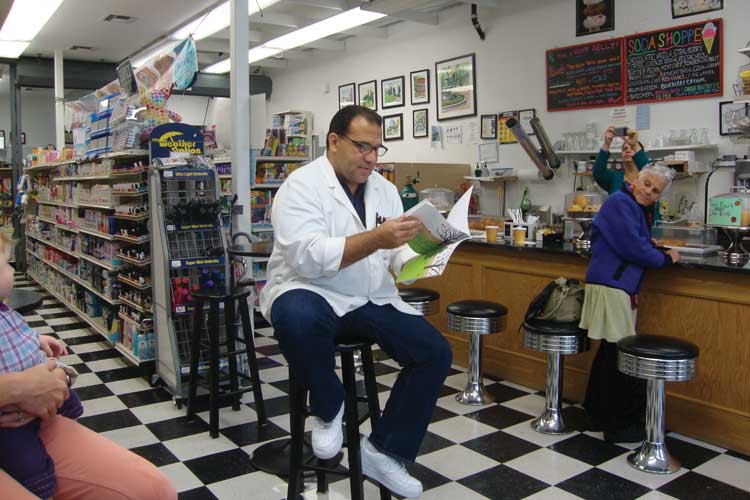
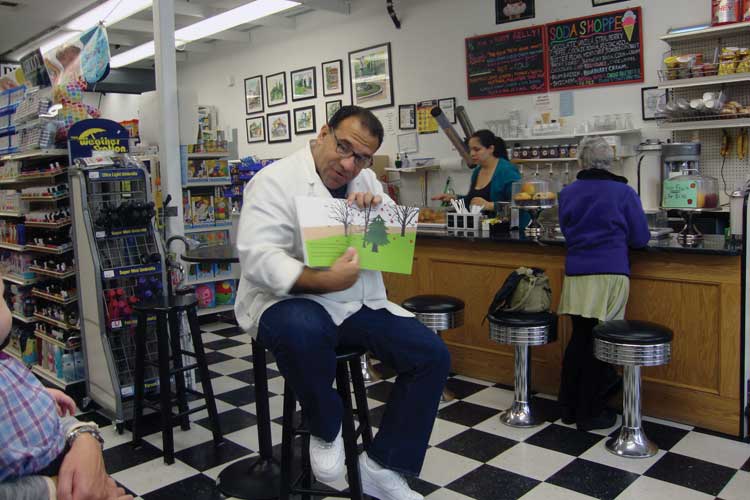
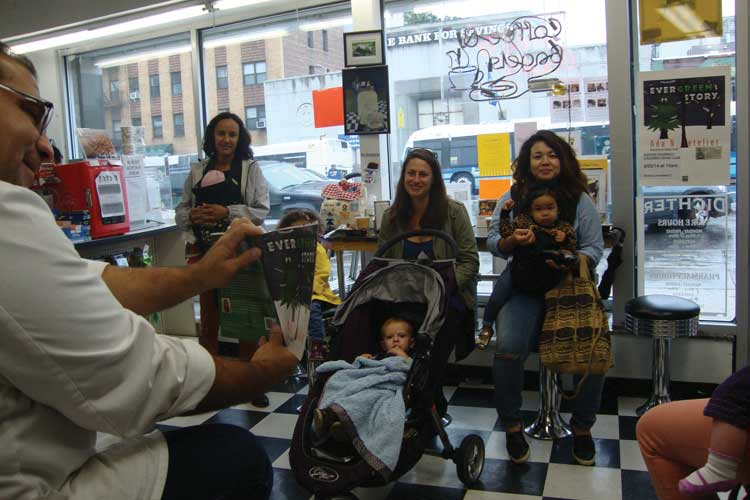
 >
>
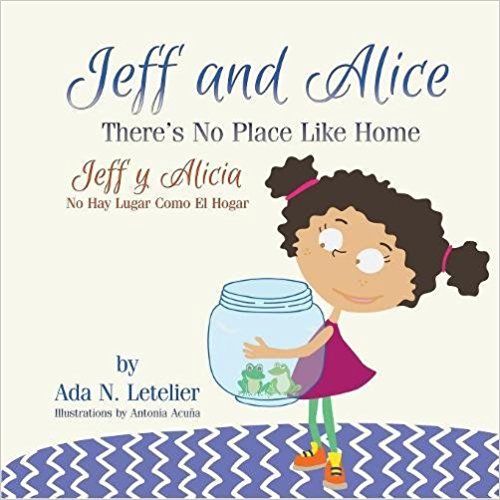 With tenderness and touches of humor, Ada N. Letelier’s new children’s book deals with the topic of death, specifically the loss of a cherished pet. While death is a topic that many parents struggle with, this book shows how parental support, love, and understanding can help children grieve through a difficult time. When young Nicole comes home with two frogs, Jeff and Alice, the little girl announces she wants them as pets. Mom and Dad do everything they can to help Nicole care for them, but disaster strikes when Alice dies. Would Jeff be better off in the frog’s natural habitat? Though this is a sad story, the book has a happy ending, in which all children (even those without pets) can relate to and learn from.
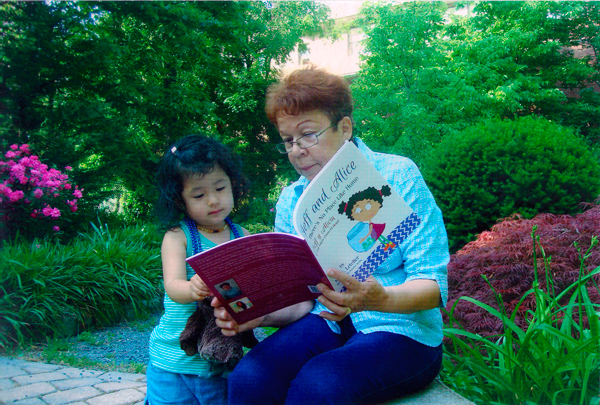
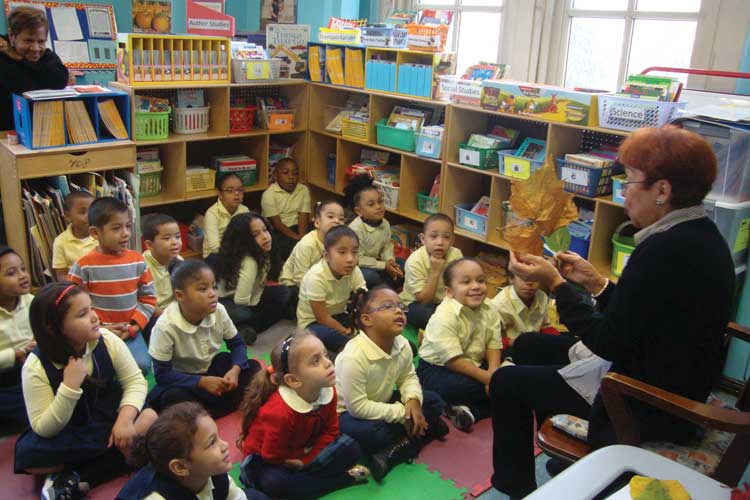
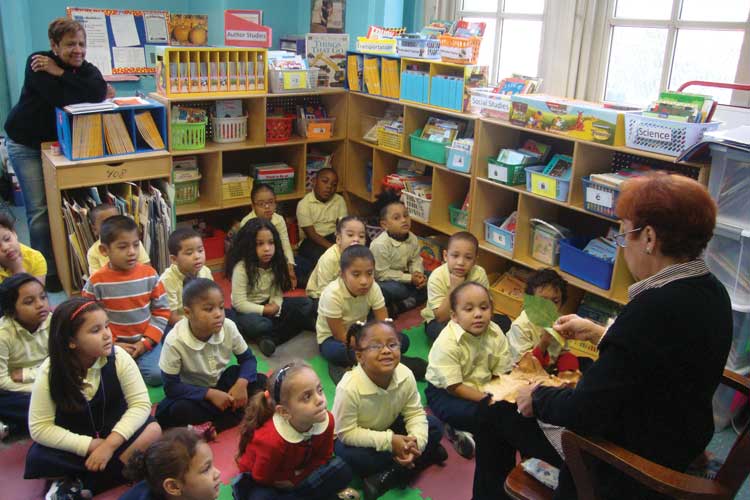
Ada worked as an early childhood teacher first and then became an elementary school principal, before retiring after more than thirty years in the New York City Public Schools. Prior, she worked at the Goddard-Riverside Head Start Center with three and four year olds. Her experience working with this young age group led her to write her first book, EVERGREENs STORY, and now her new bilingual book, Jeff and Alice / Jeff y Alicia, written in English and Spanish. She remembers how her students would sit spellbound when she read bilingual books to them. After repeated readings, her English-speaking students began to understand and use some of the Spanish vocabulary, while the non-English speaking students were also making progress in understanding and speaking English.
Antonia is a Chilean artist who successfully collaborated with the author on EVERGREENs STORY. She is passionate about illustrating great images for children's stories that bring the written word to life.
Myriam, wrote a 5 star review titled "Sensitive" from Amazon.com "On a cold read, ones initial reaction to the story is "how sad!". Yet the important lesson to be learned is treated in a realistic, yet tender manner with the added advantage of seeing this difficult topic through a child's eyes. This story not only teaches children about respecting the life of animals, it also shows parents how to be supportive of a child's learning experiences and how to handle when they are faced with a difficult experiences such as this one. Educators will also find this a helpful read in preparing their students on all aspects of having a class pet!"
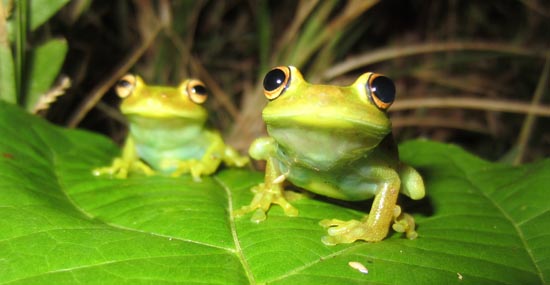
1. Frogs have bulging eyes that help them see in front, to both sides and partially behind them. 2. Frogs come in all sorts of colors. 3. Frogs do not drink water -- they absorb it through their skin. 4. Not all frog sounds are alike. Some chirp, whistle, ribbit, peep, cluck, bark and grunt. 5. Only the male frog can croak. 6. Frogs will not give you warts, that is just a myth. 7. Frogs are born as tadpoles. They have a big head and a long tale. They don't look like frogs yet! 8. Frogs prefer to live in ponds, lakes and marshes because the water doesn't move very fast. 9. Some frogs live in trees. 10. Frogs have long strong hind legs that enable them to leap forward at great distances. 11. A group of frogs is called an army. 12. Frogs hibernate in the winter. 13. A frog won't turn into a prince, no matter how many times you kiss him!
"Death is something most of us aren't really good at explaining because the subject is so painful. Part of the experience is finding ways to express what's happened, to make sense of what's happened and finally to accept what's happened."
TIPS.
1. Tell the truth about what happened right away. 2. Be prepared for a variety of emotional responses - there is no one right response. 3. Make sure to use the words dead or died (research shows that using realistic words to describe death helps the grieving process). 4. Share information in doses (especially with young children). Share information in small bits at a time. You'll know what more to say based on your child's questions. Under age five a child needs comfort and support rather than detailed explanations. Over age five a child needs information that is simple, accurate, and direct. 5. Be comfortable by saying, "I don't know." 6. Cry. Cry together. Cry often. It's healthy and healing. 7. Let your child grieve in his or her own way.
This Book Inspires Arts and Crafts Projects:
1. Download frog coloring pages from the inter-net and run off copies for the children to color. You can find frog coloring pages at http://www.coloring.ws/frog1.htm
-or-
Trace Jeff and/or Alice or both from the book - Jeff and Alice /There's No Place Like Home. Cut out the traced drawing of your frog and glue it onto a plain piece of white paper. On a printer enlarge the drawing (as big as you want). Run off as many copies as you need. Children can color in the pictures as they wish. 2. Go to http://www.craftymorning.com and learn how to make a lilly-pad using a doily and cupcake liners. 3. Using things found in a park (leaves, twigs, tree bark) children can make dioramas of Jeff or Alice or both sitting on the grass, on a twig, or a lilly-pad (see #2 above). If you don't have a shoe-box you can use recycled cardboard from grocery boxes.
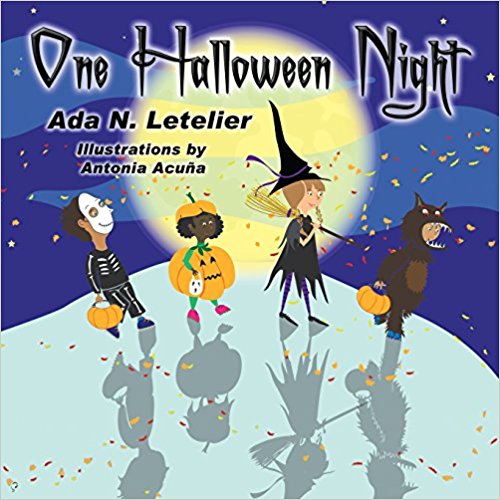 It all happened One Halloween Night. Ada N. Letelier's new book is a Halloween-themed who-done-it written in rhyme.
Trick-or-treaters are in for a real treat when they pass by Jack-o-lantern's house on Halloween night only to discover a missing apple pie and evidence that Jack-o-lantern may have been involved. But how could that be?
On Halloween kids get to carve pumpkins, dress up in scary costumes, go trick-or-treating with friends and just maybe, get to hear spooky stories.
Holidays should be fun-filled, exciting and memorable for children. Sharing a good book needs to be at the top of the list!
It all happened One Halloween Night. Ada N. Letelier's new book is a Halloween-themed who-done-it written in rhyme.
Trick-or-treaters are in for a real treat when they pass by Jack-o-lantern's house on Halloween night only to discover a missing apple pie and evidence that Jack-o-lantern may have been involved. But how could that be?
On Halloween kids get to carve pumpkins, dress up in scary costumes, go trick-or-treating with friends and just maybe, get to hear spooky stories.
Holidays should be fun-filled, exciting and memorable for children. Sharing a good book needs to be at the top of the list!
Ada N. Letelier is a retired early childhood educator. She started her teaching career at the Goddard-Riverside Head Start Center where she taught three and four year olds. Transferring to the New York City Public School system she continued as an early childhood teacher, moving up the ladder to become an assistant principal and later principal at two different schools. This is her third children's book. In her previous two books, her challenge was to write stories that would not only entertain young kids but could also provide valuable life lessons. In her latest book, her goal is to write a light-hearted, whimsical who-done-it that will bring laughter, wonderment and joy to young readers.
Antonia Acuña is a Chilean artist and children's book illustrator who creates delightfully entertaining drawings. From her mischievous Jack-o-lantern, costumed trick-or-treaters, spooky haunted house and a swinging skeleton band, she captures the magic of this fun-filled holiday in her art.
Charles Asher wrote a 5 star review titled "A Delightful Halloween Story" from Amazon.com "One Halloween Night is a delightful children’s book written with an engaging, rhyming rhythm, fanciful content, and fully illustrated in a vibrant and playful style. As a light-hearted mystery (about a jack-o-lantern that may have eaten a pie), the book embraces the spookiness of Halloween, while retaining the irreverent and celebratory tone of the holiday, making it a romping trip through the costumed and decorated neighborhood, presenting a mix of trick-or-treaters and fun-loving (and possibly real!) monsters and spirits. One Halloween Night is perfect bedtime reading, whether on the holiday itself, in the fall season, or even all year round. Humorous, evocative, and a total joy from start to finish, this book is a wonderful addition to anyone’s picture book collection."
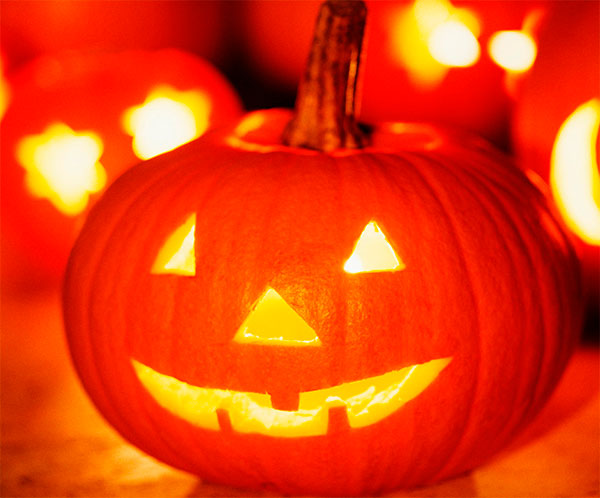
I. Carve out a pumpkin and make your own jack-o-lantern. II. Candy Corn Collage: Materials Needed: 1. cut-out image of a candy corn made from white construction paper or soft cardboard paper (card stock). You can cut several images beforehand or have the children trace and cut-out their own candy corn image. 2. orange, yellow and white construction paper. 3. glue stick or glue. 4. picture of candy corn - you probably have some candy corn around the house - to use as a sample so children will know where to glue the different colored paper. How To: 1. Have children cut up the different colored construction paper into small pieces with their hands. 2. Glue the different colored pieces onto the cut-out candy corn; white at the top, orange in the middle and yellow at the bottom. 3. Have them fill in the entire space where the colored pieces are to go. III. Paper Plate Frankenstein Materials Needed: 1. white paper plates. 2. green paint. 3. black construction paper. 4. black crayons. 5. glue stick or glue How To 1. paint the paper plate green (let dry). 2. using pre cut-out face details (for younger children) or have kids draw and cut out hair, eyes and ears (screw-type) on the black construction paper. 3. glue the hair, eyes and ears onto the paper plate face. 4. have children draw in the mouth with the black crayon.
You can find all my books in these online stores at a very good price, and in the future, find my new books that I'll be publishing.



Please feel free to contact me. I'm looking forward to answering your e-mails.